
Thermoplastic polyester elastomer (TPEE) combines the high elasticity of rubber with the thermoplasticity of engineering plastics, making it an easy to process thermoplastic elastomer. The chain segments of TPEE contain different proportions of hard segment crystalline parts and soft segment amorphous parts. Increasing the proportion of hard segments can enhance physical rigidity and chemical stability, while increasing the proportion of soft segments can improve flexibility and low-temperature performance. This product can be used to improve the high and low temperature impact strength (toughness), flexibility, and compatibility of plastic blends, and provide a certain degree of elasticity. It can be injection molded or extruded using traditional thermoplastic molding techniques; Can be used to modify POM, PBT, PET, or in combination with PVC, PP, polyacetal, and alpha; -Blending of olefin alternating copolymers, blending with other elastomers, etc.
(1) Product Features
1、 Strong mechanical performance: It has high impact resistance, high tear resistance, and good friction resistance.
2、 Fatigue resistance: It can maintain its performance unchanged after repeated bending and twisting, and has good creep resistance.
3、 Chemical and oil resistance: It has good resistance to most oils, mineral oils, fuel oils, and chemical solvents.
4、 Weather resistance and low-temperature flexibility: It can resist environmental aging such as ultraviolet rays, rain, snow, ozone, etc. for a long time, while ensuring flexibility in extremely cold and low-temperature environments, without brittleness or cracking, and adapting to changes in temperature throughout the four seasons.
5、 Stable performance: Low water absorption rate, able to effectively resist environmental moisture infiltration, good dimensional stability.
6、 Easy to process: Fast crystallization speed, easy molding, can be processed using standard thermoplastic processing equipment for injection molding, extrusion, blow molding, etc.
7、 Wide range of hardness: typically ranging from Shore D 20D to 80D, performance can be precisely adjusted by changing the ratio of hard and soft segments.
8、 Environmental Protection and Recyclability: Free of plasticizers and halogens, meeting environmental requirements, and processing waste and old parts can be recycled and reused.
(II)TPEE models and their performance
TPEE Performance Summary
|
Test items |
Testing methods |
25D |
32D |
35D |
45D |
63D |
72D |
|
Tensile strength, 25 ℃, MPa |
GB/T 528 |
5.5 |
8.4 |
9.6 |
16.2 |
32.3 |
38.5 |
|
Elongation at break, 25 ℃,% |
GB/T 528 |
410 |
544 |
450 |
453 |
599 |
475 |
|
Shore hardness, 3s, HD |
GB/T 2411 |
25 |
32 |
35 |
45 |
63 |
72 |
|
Density, g/cm3 |
GB/T 533 |
1.130 |
1.108 |
1.138 |
1.147 |
1.246 |
1.290 |
|
Melt flow rate, g/10min (220 ℃, 2.16kg) |
GB- 3682 |
16 |
42.9 |
21.04 |
12.9 |
- |
- |
|
Melt flow rate, g/10min (230 ℃, 2.16kg) |
GB- 3682 |
- |
- |
- |
- |
29.34 |
- |
TPEE fuel blocking technology description
Thermoplastic TPEE flame retardant is a modified TPEE special material developed by our company. It is low toxic and environmentally friendly, with halogen/halogen-free properties and flame retardancy up to V0 level. It is widely used in automotive parts, electronic appliances, communication cables, sports equipment, daily necessities and other fields.
|
Test items |
Testing methods |
Environmentally friendly flame retardant TPEE Typical values |
Halogen free flame retardant TPEE Typical values |
|
Tensile strength, 25 ℃, MPa |
GB/T 528 |
9-30 |
8-27 |
|
Elongation at break, 25 ℃,% |
GB/T 528 |
250-500 |
220-400 |
|
Shore hardness, 25 ℃, 3s, HA |
GB/T 2411 |
25-75 |
25-75 |
|
Cantilever beam impact strength, 25 ℃, KJ/m2 |
GB/T 1843 |
NB |
NB |
|
Melt flow rate, g/10min (220℃,2. 16kg) |
GB/T 3682 |
6-15 |
7-13 |
|
Flame retardant rating |
UL94 |
V0 |
V0 |
|
Density, g/cm3 |
GB/T 1033 |
1.2-1.3 |
1.2-1.3 |
|
Drying temperature of the material, ℃ |
- |
90- 110 |
90- 110 |
|
Drying time, hr |
- |
2-3 |
2-3 |
|
Suggested processing temperature, ℃ |
- |
195-240 |
195-240 |
|
Mold temperature, ℃ |
- |
45-55 |
45-55 |
(Three)Typical application areas
TPEE is widely used in the following fields due to its unique performance combination:
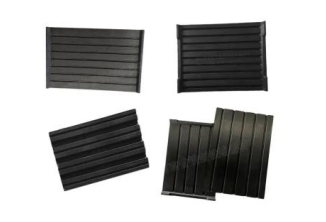
Applied to rail transit sub rail pads, such as light rail, high-speed rail, subway, and heavy-duty railway sub rail shock-absorbing pads. The ratio of movement and stillness is appropriate, and the rebound is good.
.jpg)
2、 Widely used in the production of automotive components, such as engine intake pipes, transmission shaft dust covers, airbag housings, automotive fuel vapor pipes, fuel tanks, air brake pipes, etc. Due to its excellent chemical and weather resistance, TPEE has superior performance and longer service life when used in automotive structural components compared to other elastomers.
.jpg)
3、 Used in the field of electronics and electrical engineering, such as fiber optic cables, communication cables, antennas, etc. Exhibiting excellent heat resistance, elasticity, creep resistance, and insulation properties.
.jpg)
4、 Used for industrial products such as hydraulic hoses, inflation tubes, gears, robotic arms, couplings, seals, gaskets, shock absorbers, etc.
.jpg)