

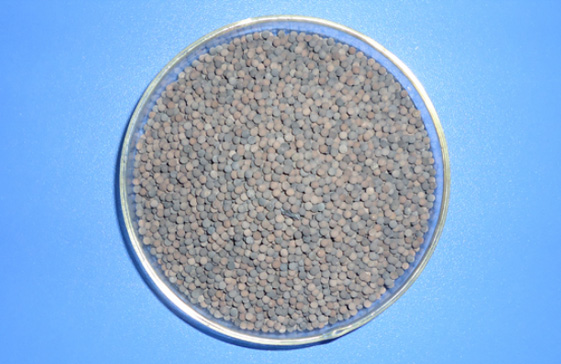
Used for desulfurization of refined benzene in cyclohexanone plant.
The benzene desulfurization catalyst is a specialized refined benzene desulfurization catalyst developed by our company for the cyclohexanone plant. The catalyst is produced using our company's unique technology and has the advantages of high desulfurization accuracy, large desulfurization capacity, high compressive strength, large pore size, and strong adsorption capacity. It can remove thiophene from benzene to<0.01ppm, with a sulfur capacity of 0.8g thiophene/kg catalyst, which meets and exceeds the performance indicators of similar imported products and ranks at the leading level in China.
Combined with alumina desulfurizer, it can deeply remove sulfides such as carbon disulfide, thiol, sulfide, thiophene, etc. from benzene to avoid poisoning of the benzene hydrogenation catalyst in subsequent processes.
The main performance and technical indicators are:
|
Project |
Indicators |
|
Model |
HS201 |
|
Palladium content |
1.0± 0.05 wt% |
|
Specific surface area |
≥ 300 m2/g |
|
Bulk density |
0.7± 0.05 g/ml |
|
Compressive strength |
≥ 30 N/piece |
|
Sulfur capacity |
≥ 0.8g thiophene/kg catalyst |
|
Particle size |
φ 1.5~2.5 mm |
|
Chlorine content |
≤ 100 ppm |
|
Water content |
≤ 2% |
Usage conditions:
|
Project
|
Raw materials |
Phase state |
Operating pressure |
Operating temperature |
Use airspeed |
|
Condition |
Benzene |
Liquid |
0.8~1.0MPa |
140~160℃ |
<4 h-1 |
The requirements for inlet benzene are as follows:
|
Number
|
Project |
Indicators |
|
1 |
Purity (mass fraction) |
≥ 99.95% |
|
2 |
Non aromatic hydrocarbons (mass fraction) |
≤ 500ppm |
|
3 |
Total sulfur content (mass fraction) |
≤ 0.5ppm |
|
4 |
Thiophene content (mass fraction) |
≤ 0.06ppm |